Jorge Dachala: Angolan photographer documenting culture, quiet moments, and the people around him

17 mins read
•
Published22 Sep, 2026

“I took money I should have used to pay for my school tuition and bought a camera, a Nikon D90. My parents were not happy at the time, but I still have it to date.”

Jorge Dachala is a Nairobi-based Angolan photographer and the Programs Coordinator for Kenya at Unpublished Africa, a pan-African non-profit organisation supporting emerging photographers and creatives across the continent.

Born in Huambo, central Angola, Jorge moved to Luanda when he was two years old and later moved between Namibia, South Africa, and Kenya for school. It was during high school in Cape Town that he was first introduced to visual arts, mixed media, and visual communication design.

He studied Mass Media Journalism at Mount Kenya University in Nairobi and picked up a camera for the first time in February 2020. Photography began as something to keep him occupied during the COVID-19 lockdown, eventually becoming a professional pursuit.

Five years into his photography journey, Jorge has worked with NGOs, the Angolan national football team, and major music events. Alongside his own practice, he coordinates Unpublished Africa's programmes in Kenya, helping organise photo walks, exhibitions, and other community activities in Nairobi.

Jorge Dachala - Angolan multidisciplinary photographer

How did you get started in photography?

I believe our journey starts before we even realise it. For me, my photography journey began in Cape Town, South Africa.

In high school, we could choose creative subjects such as Mixed Media, Music, Visual Communication Design, and Photography. I chose Mixed Media Art and Visual Communication Graphic Design. I enjoyed observing the world around me, drawing, and painting. It was also the first time I realised that photography could be an option for me, even though I did not choose it as a school subject.

Learning about line, colour, texture, shape, and contrast helped me understand the visual language of photography and videography.

During the COVID-19 lockdown in 2020, I moved in with a classmate of mine, Hussein Shabani, who was a professional photographer. I asked him to teach me photography. At first, it was simply a way to pass the time. Still, because I was studying Mass Media and Communication at university, I also felt I needed to develop practical skills.

In August that year, I got a job on campus at a call centre monitoring trucks in the US through the internet. I saved for three months and managed to buy a computer, but I could not afford both a computer and a camera. So I took money I was supposed to use for my school fees and bought a Nikon D90.

My friend then began giving me more focused photography lessons and referring customers to me. I spent a lot of time walking around Thika and taking street photographs, inspired by street photographers I had followed on Instagram, including Waynehipe.

I was still working 12-hour shifts at the call centre. When I eventually lost the job, I needed to find a way to make money, and that was when I decided to pursue photography professionally.

"We need more accessible photography communities that are open to people regardless of skill level, inside knowledge, entry fees, or access to equipment."

How would you describe yourself?

I would describe myself as a creative person who loves to explore different artistic disciplines. I have tried various forms of art, including weaving, pottery, painting, drawing, sculpting, and graphic design.

I also love entering new environments and learning about those places, cultures, and people. Every new place has its history and nuances, and I try to familiarise myself with them.

Another big part of who I am is building connections with people. I enjoy finding out about their interests, goals, and ideas, why they choose to do what they do, whether they enjoy it, and what motivates them. I learned in Kenya how to build community through meaningful connections and shared values.

I have also been hosting photo walks in Kenya. This work has taught me that we need more mentorship programmes where new photographers can meet experienced photographers and exchange information and skills. We also need more accessible photography communities that are open to people regardless of skill level, inside knowledge, entry fees, or access to equipment.

One of the reasons I keep doing this work is because I wish those opportunities had existed when I was learning photography. They would have been a huge advantage when I was starting out.

Reading all this, you might make the mistake of thinking that I am an extrovert. Nope, dear reader, I am most definitely not. I love staying home, and I enjoy cancelling plans to stay at home. If I were not a photographer, I would be in serious trouble in terms of my social skills.

“I think photographers are custodians of culture and history. We document the things happening around us, whether they seem important at the time or not.”

What are the main themes that inspire your photography?

When you take a picture of a person, you are not just capturing the person. You are also capturing all the small details that tell you something about them. The way they dress can tell you about their culture or the group they belong to. They might have scars or tattoos, be smiling or frowning, have long hair or short hair. Then there is the place where you find them.

All these details contribute to a story, and as photographers, we help shape that story. That can sometimes work in favour of our subject or against them.

When I started, I wanted to photograph the interesting things I was experiencing in Kenya: an unfamiliar environment, two friends seeing each other after a long time, a moment of affection, or a small detail happening in the background. Movies also influenced the way I learned to notice and capture quiet moments.

What makes an image worth documenting is a difficult question, and I do not think there is one answer. Sometimes it is an occasion such as a wedding, ceremony, or celebration that may never happen again. In those moments, my job is to keep a record of what happened.

Other times, it is an important moment in history, such as the Gen Z-led protests in Kenya in 2024. Sometimes it is something ordinary, like the street outside my house. In five years, that street might look completely different, and I want to have a record of what it looked like.

I think photographers are custodians of culture and history. We document the things happening around us, whether they seem important at the time or not. I am also inspired by the desire to become better at what I do. I want to master my craft, keep learning, and continue improving.

Women also inspire my photography. If you look at my work, you will see women feature strongly in it. I love photographing women from different urban communities, including skaters, athletes, executives, and fashion models. I enjoy showing their beauty, confidence, talent, and the different ways they express themselves.

"My work with Unpublished Africa has been another important part of that journey. Over the past year, I have helped organise the community in Kenya."

What moment in your career are you most proud of?

In 2023, after about three years of doing photography, I wanted to find a way to show my work. I had a collection of mostly street photographs, but I was unsure about their quality. I started applying for exhibitions and received more rejections than I can remember. Each one taught me more about selecting and presenting my work.

Then I found Nairobi Design Week, an annual event featuring fashion designers, musicians, painters, muralists, photographers, and other creatives. I submitted my work and, to my surprise, it made it through the curation process. That became my first exhibition.

Being part of Nairobi Design Week changed how I looked at my work. Until then, I had mostly wondered whether the photographs were good enough. Suddenly, people I did not know were interested in seeing and displaying them. It gave me confidence in my artistic vision and showed me that my non-commercial work could have a place too.

Another important moment came in 2025, when I was asked to work as the team photographer for the Angolan national football team during the CHAN tournament in Kenya.

The opportunity came about unexpectedly. When the team arrived in Kenya, the Angolan Embassy called on Angolans living there to welcome them. There were only about 50 of us, so it was a small community gathering. As an Angolan citizen, I decided to attend and brought my camera with me.

The team was having some issues, and their photographer was not there. When the embassy saw me with my camera, they asked to see some of my previous work. They liked what they saw and asked me to join the team as their photographer for the rest of their stay in Kenya.

I photographed their training sessions, matches, downtime, movements, and press appearances. I had to adjust quickly to the way the team worked and to the pace of an international championship. There is very little room for mistakes in that kind of environment. You have to be in the right place at the right time because the moment will not come back.

Beyond the work itself, the experience meant a lot to me personally. Seeing my national team play and wearing the team's uniform was something I felt proud of. It was also a reminder of how far photography had taken me in just a few years.

My work with Unpublished Africa has been another important part of that journey. Over the past year, I have helped organise the community in Kenya through photo walks, exhibitions, photo exchanges, and publications.

Working with the organisation has taught me that building a creative community takes time, consistency, patience, resources, and a clear sense of purpose. I am proud of the work we have done, and I hope the community continues to grow beyond my involvement.

“You do not always have to figure everything out on your own. People who are ahead of you can help with advice, equipment, knowledge, experience, and opportunities.”

What is the biggest challenge you've faced as a photographer?

Equipment has been one of the biggest challenges I have faced. It can limit the kind of work you can take on and the clients you can work with.

I learned the value of having a good support network, especially when you are starting out. More experienced photographers can vouch for you when you need to rent equipment, recommend the right gear, and help you avoid spending money on things you do not really need.

There was a time when I got an opportunity to document a large concert in Nairobi featuring established and internationally recognised performers. Two of my mentors were involved in organising the concert, and both were photographers.

At the time, I only had a crop-sensor camera from 2008 with a 50mm lens. It was not enough for the kind of professional concert I was about to photograph.

Luckily, one of my mentors, George Mimano, whom I was interning with at the time, stepped in. He lent me a professional camera body and a selection of lenses that gave me everything I needed for the job. With his help, I was able to do a great job and add the concert to my portfolio.

I had a similar experience during the CHAN 2025 tournament. I was asked to photograph the second match of the Angolan national team against Kenya, but I did not have the equipment needed to properly cover a football match.

Thankfully, I had another mentor, George Munge. Yes, I have multiple mentors called George. No, they are not related.

Mr Munge agreed to act as a guarantor with the rental companies. Because he was willing to vouch for me, I was able to rent equipment that would normally cost the price of a small family car for about the price of a full-course meal at an upscale restaurant.

That support made it possible for me to do the job properly. More importantly, it reminded me that you do not always have to figure everything out on your own. People who are ahead of you can help with advice, equipment, knowledge, experience, and opportunities.

What type of photography do you specialise in?

I work across street photography, documentary photography, event photography, and creative portraiture. I move between commercial assignments and more personal work that I show in exhibitions.

What is your primary commercial niche?

Family events, corporate events, and creative portrait work make up the commercial side of what I do. I have been influenced by companies such as Twist Picture and Tag House, which have set a high standard for this kind of photography in Kenya.

My clients particularly enjoy the candid, unaware shots I include alongside the expected posed pictures.

"The pictures are either good or they are not, and the client is either happy or they are not. But now I see the importance of having fun during work."

What is your unique technical or visual approach?

My approach starts with genuine curiosity and care. When I started taking photographs, I would walk for hours in town taking pictures of people and places. Curiosity also shapes how I approach people.

Are you friendly? Are you respectful? Are you confrontational? If someone says no or looks uncomfortable, you should be able to walk away without arguing or trying to convince them otherwise.

Taking photographs of people while they are unaware also comes down to inhabiting the space. You are not a tourist in that space; you are part of it. You follow its rules, leadership structure, dress code, customs, and expectations.

I always want to take photographs that are an honest reflection of the people while placing them in the best light I can in that moment.

That approach also affects my event photography. My clients really enjoy my candid photographs, so I make sure to include plenty of them alongside the expected posed pictures. In that way, I can tell the story of their events more authentically.

Having minimal gear also helps reduce the barriers between me and the work. I like small cameras, small lights, and equipment that is portable and quick to set up.

I am also learning to have fun during shoots. I have always taken shooting very seriously, especially events, but one of my mentors, Di Major, always has so much fun during a shoot. After a shoot, once we establish that everything went well, he always asks if I had fun.

Previously, I thought, why should I care if I had fun? The pictures are either good or they are not, and the client is either happy or they are not. But now I see the importance of having fun during work.

If I am not having fun, something might be wrong. Maybe I am not well prepared, I do not want to be working with the client, or I am too tired. Now I try to have fun and ask myself why I am not.

"Having lived in Cape Town for five years, his work resonates with me strongly. He was the first photographer who made me understand what street photography could be."

Which global brands, photographers, or industries do you feel your work aligns with most?

My commercial work includes family events, corporate events, and creative portrait photography. Companies such as Twist Picture, led by Oliver Twist, and Tag House, led by Di Major, have influenced this side of my work. I have had the chance to work with both, and they have helped shape my understanding of what strong photography looks like in this space.

For my street and documentary photography, Waynehipe and Billy Dinh are two of my biggest influences.

Waynehipe was the first street photographer whose work I really connected with. He photographs Cape Town almost exclusively, but captures it in a way that feels nostalgic even if you have never been there. Having lived in Cape Town for five years, his work resonates with me strongly. He was the first photographer who made me understand what street photography could be.

Billy Dinh also inspires me because of the way he photographs places. His images often feel as though they exist outside of time. You can look at one of his photographs and feel like it could have been taken at almost any point in history.

For my creative portrait work, David Suh is another photographer I really admire. His creative fashion photography, particularly his approach to posing, has made me think about posing as an art form in its own right.

I am also inspired by Kim Praise, an Angolan photographer and cinematographer. His work is memorable and has a distinct visual style. I hope I get the chance to work with him one day.

Michael Aboya is another photographer whose work I admire. His conceptual and creative portraits feel almost like visual poems, and I appreciate the way he brings ideas, art, and photography together.

I would also love to work with streetwear and fashion brands such as Adidas. They have worked with photographers whose approach to fashion and culture I admire, and being part of that kind of collaboration is something I would like to experience.

These are only a few of the people who inspire me. I am also influenced by cinematographers such as Ryan Coogler and photographers such as Mutua Matheka, among many others.

How is the photography and art space in Angola?

In Angola, the photography space is well developed, but opportunities and resources are not equally accessible to everyone. There are photographers with the resources to develop their practices, while others face greater barriers.

I hope that changes in the future and that more photographers can access the resources, communities, and opportunities they need to develop their work.

What is one professional standard you never compromise on?

I do not compromise on giving my clients the best possible experience. That includes delivering the final product on time and providing all the deliverables we agreed on beforehand. If I cannot meet those standards, I will not take the job.

What do you think of the 54Ruum platform?

54Ruum is an amazing platform that features photographers from across Africa. I love the diversity of cultures, styles, photography philosophies, genres, and approaches to photography.

It shows that there is no single way to photograph and that excellence can exist in many forms. It also helps upcoming photographers reach their full potential.

Credits

Text

Lillian Wangari

Photography

Jorge Dachala

Curation

guvnor

SHARE THIS STORY

Join Our Community

More Stories

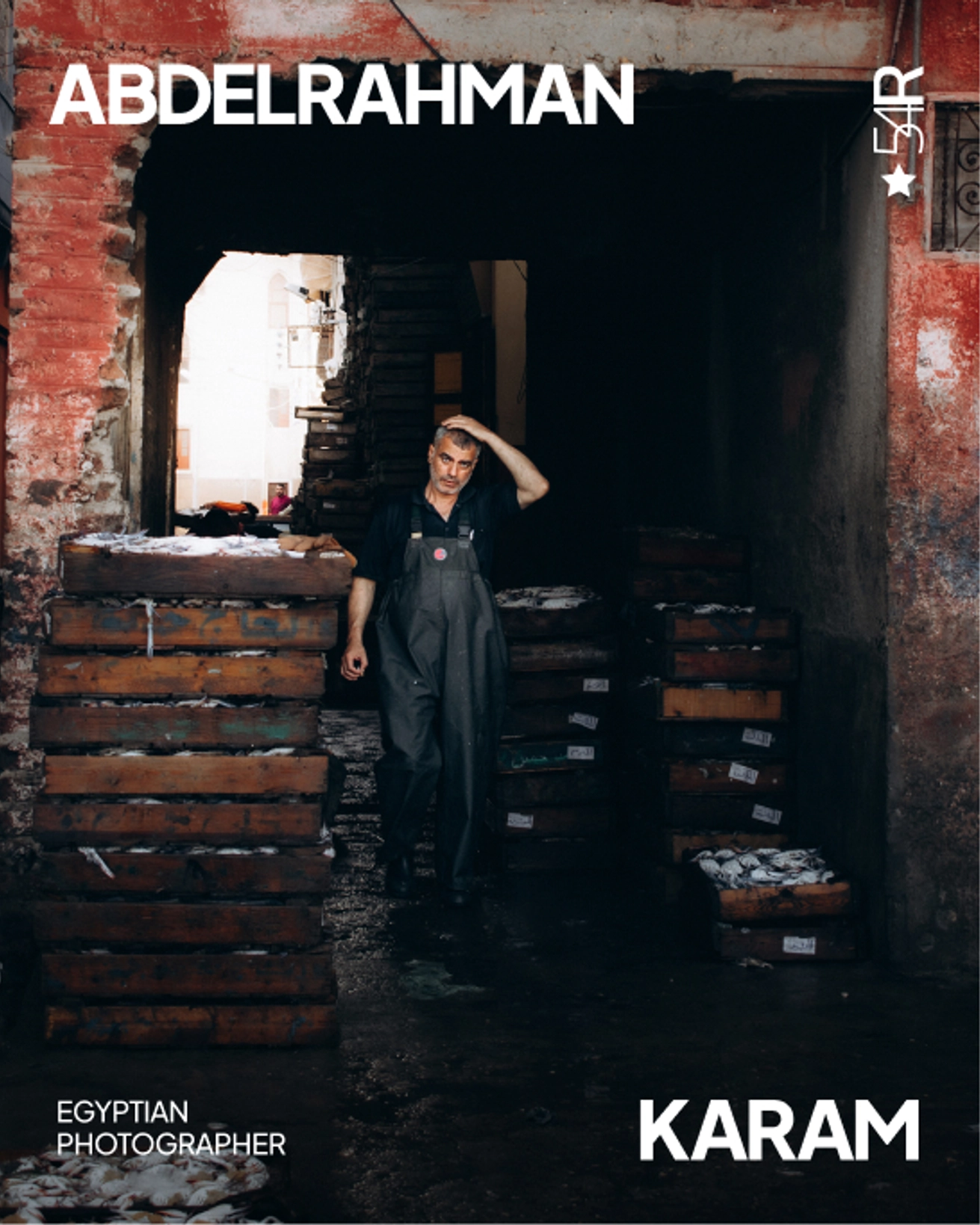
Abdelrahman Karam: Egyptian photographer finding new perspectives in people, place, and architecture
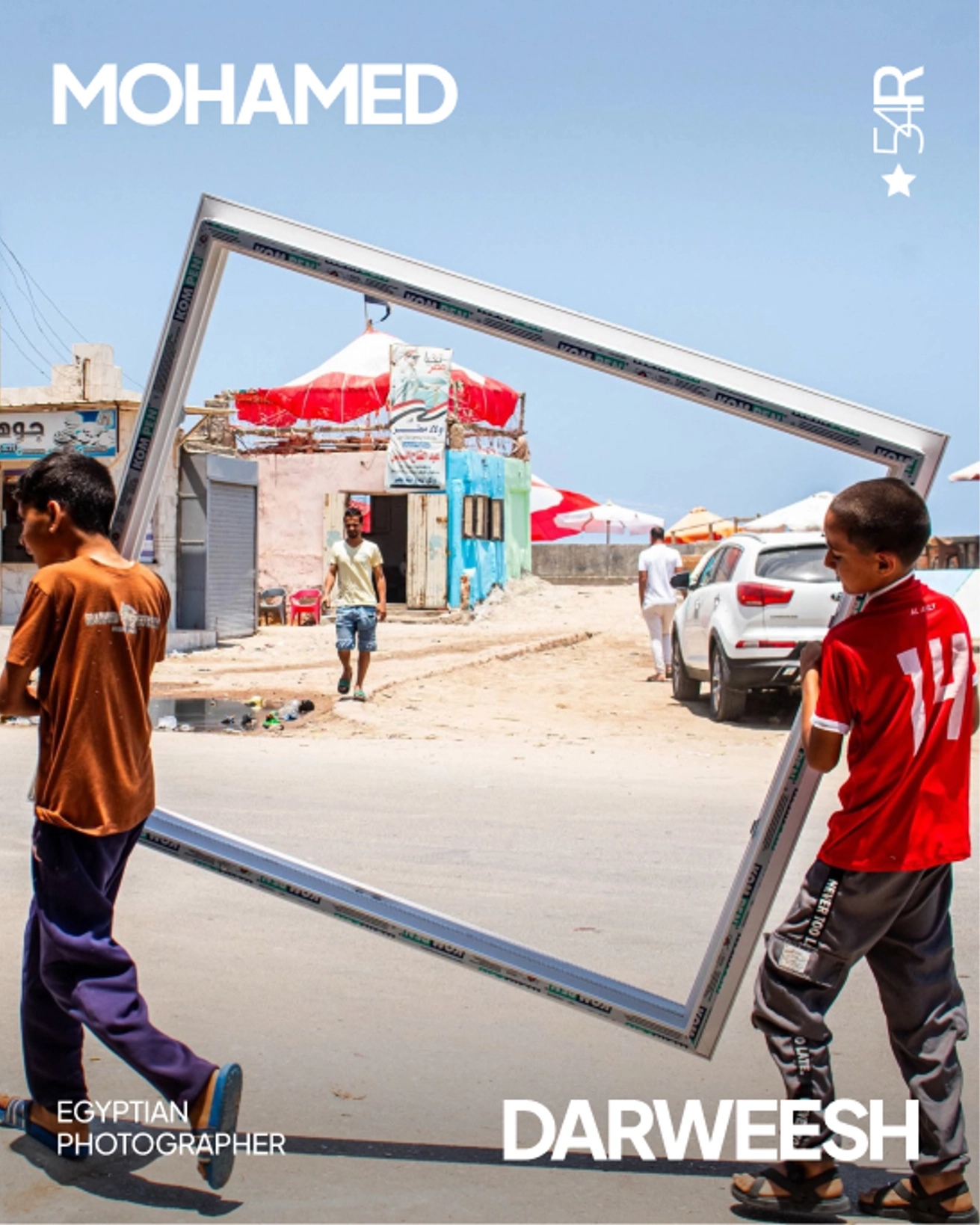
Mohamed Darweesh: Egyptian documentary photographer telling everyday stories through observation and human connection
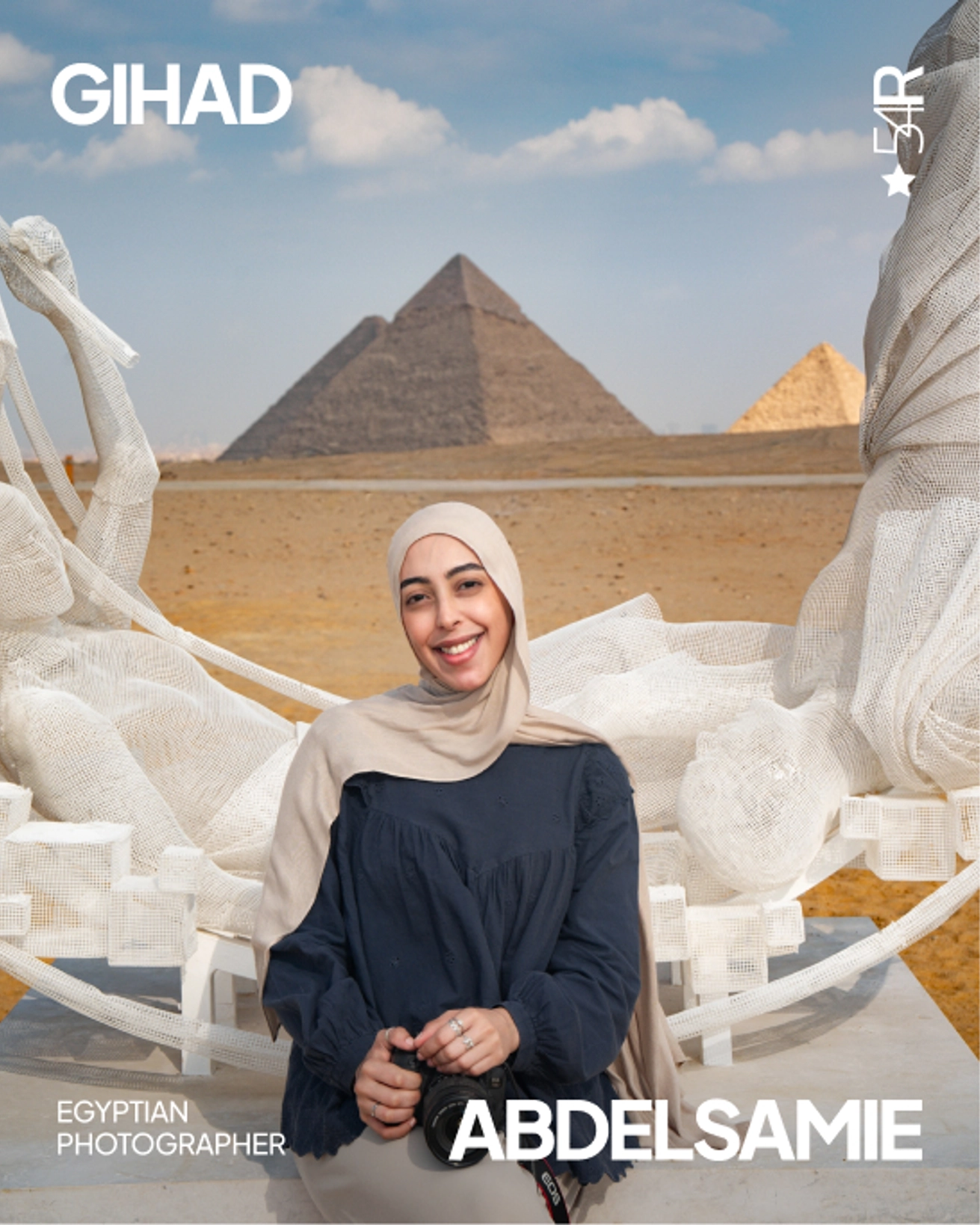
Gihad Abdelsamie: Egyptian documentary photographer preserving everyday life, heritage, and human stories
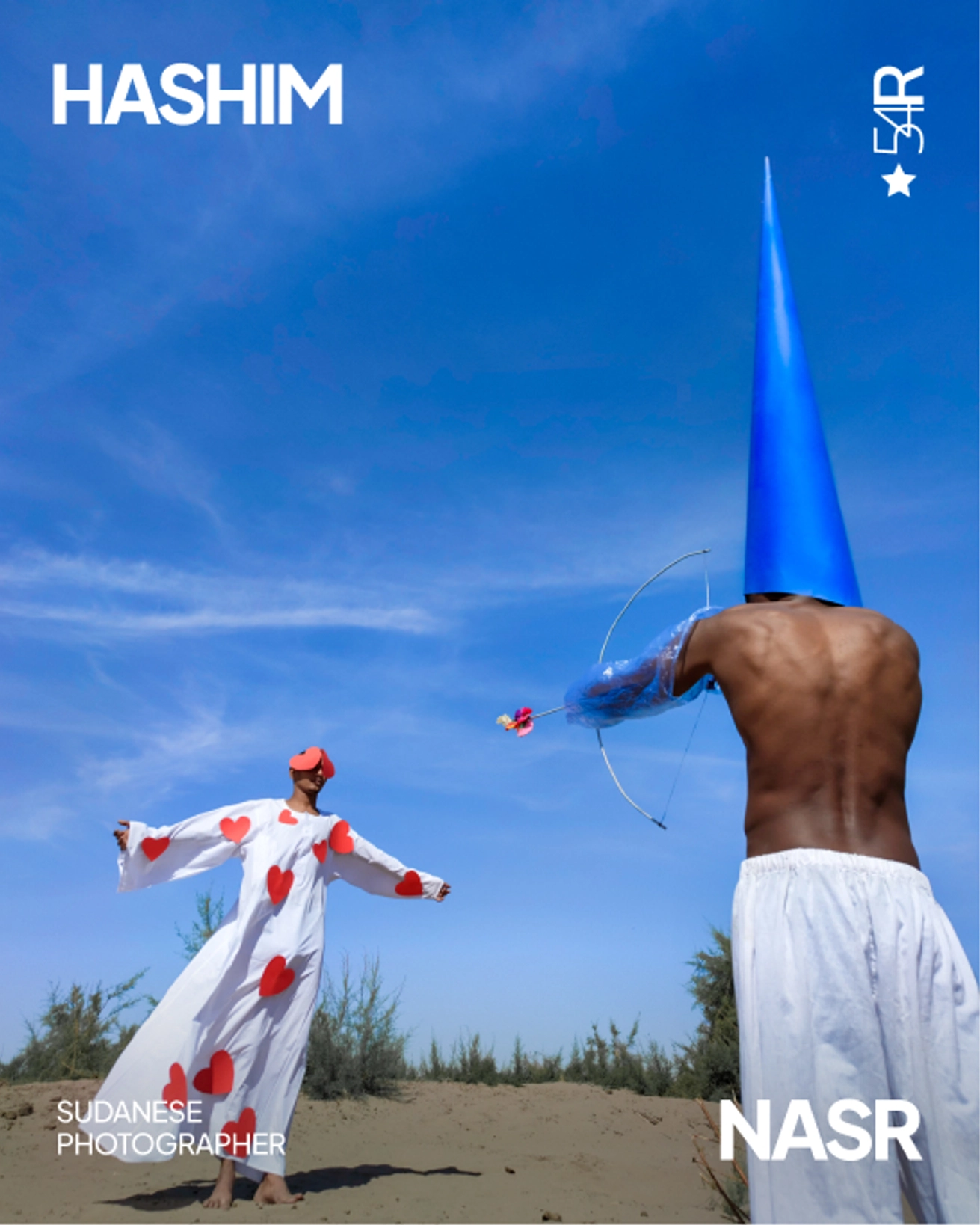
Hashim Nasr: Sudanese visual artist exploring displacement, memory, and identity through surreal photography
Rania Deabes: Egyptian street and documentary photographer finding human stories in colour, light, and unexpected moments
Rachid Moujahid: Moroccan lifestyle photographer capturing the quiet beauty of coastal life in Tamraght
Joel Adjetey: Ghanaian photographer building a visual language around fashion, identity, and African excellence
Tamibé Bourdanné: Chadian photographer exploring human connection through documentary, fashion, and his perspective on Africa
Amarachi Nnoli: Nigerian photographer documenting women’s lives, Igbo culture, and family archives through photography and mixed media
Alsyed Elsaadani: Egyptian documentary photographer exploring human stories through everyday life
Samuel Adeleke: Nigerian photographer documenting culture, identity, and quiet human moments in Northern Nigeria
Inga Nontshibongo: South African lifestyle photographer documenting urban culture through cinematic storytelling
Daniel Cole: Nigerian portrait and conceptual photographer using colour and poetry to tell stories
Omariba Angwenyi: Kenyan street and nature photographer finding meaning in overlooked moments
Malak Zerour: Algerian photographer developing her visual voice through light, colour, and everyday moments

Explore more content

Company

The Ruum Africa

Products

RTM

© 2026 The Ruum Africa

Built by